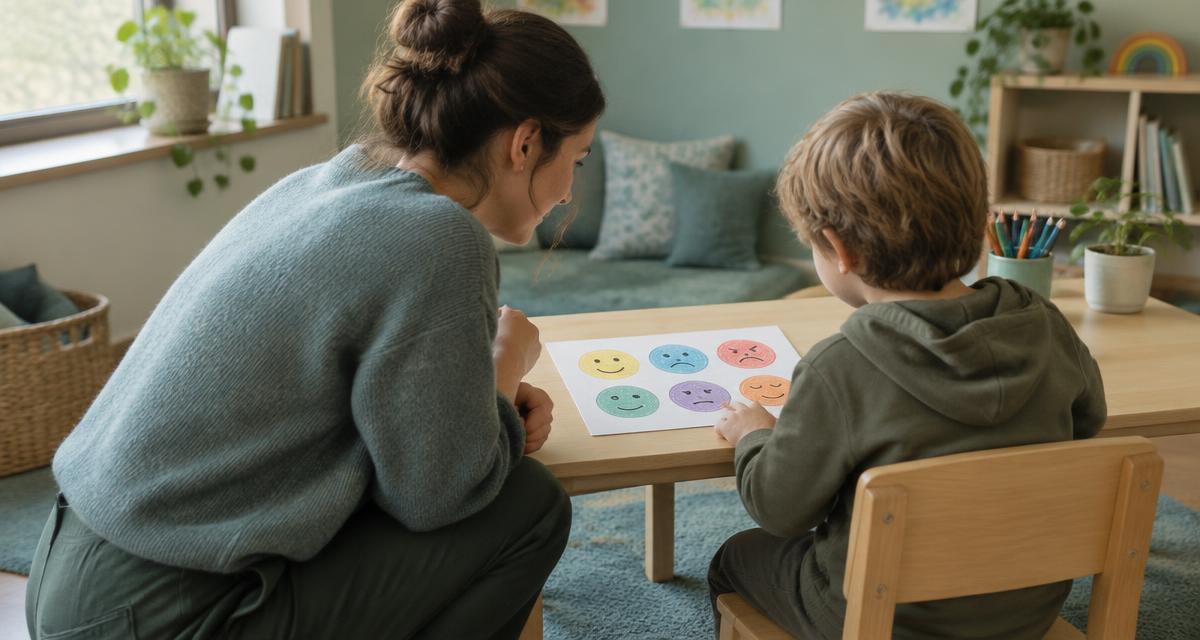
Welcome, Chris Benson: Neurodivergence and Education Specialist
By Jacqueline Klemke

Chris Benson joins Let's Be Real as our Neurodivergence and Education Specialist. Every HOLD training now includes a one-hour expert session with Chris on how neurodivergence can affect mental health and how to adapt supportive conversations.
Listen: Welcome, Chris Benson: Neurodivergence and Education Specialist
American English · AI-narrated
Listen to Jacqueline Klemke explain the ideas explored in this article. Chris Benson joins Let's Be Real as our Neurodivergence and Education Specialist. Every HOLD training now includes a one-hour expert session with Chris on how neurodivergence can affect mental health and how to adapt supportive conversations.
Read the full article
We are delighted to welcome Chris Benson to the Let's Be Real team as our Neurodivergence and Education Specialist.
Chris brings a deep understanding of how neurodivergent young people experience school, and of how adults can adapt the way they notice, listen and respond so that support actually reaches them.
A one-hour expert session inside HOLD
From now on, every HOLD training includes a one-hour expert session led by Chris. HOLD is the Youth Mental Health Response tier for teachers, advisors and pastoral staff.
- How neurodivergence can affect a young person's mental health
- Why a typical supportive conversation can miss neurodivergent students
- Practical ways to adapt language, pace and setting to each student's needs
Why this matters
A shared language about mental health only works if it includes every student. Chris's session helps staff make sure neurodivergent young people are not left out of the conversation.
If you would like to bring HOLD to your school, find your next step with us.
Evidence and sources informing this article: WHO: Adolescent mental health (opens in a new tab); Mental Health First Aid International (opens in a new tab).
Putting this into practice
A classroom example
A Year 8 student with ADHD keeps leaving her seat during independent writing and is getting a growing list of behaviour points. Her tutor notices she is also quieter at break and has stopped handing in homework. Instead of adding another sanction, the teacher checks in privately, agrees a movement break after ten minutes of writing and a visual checklist for the task, and logs the change in mood with the pastoral lead, because the withdrawal may have nothing to do with ADHD at all.
Words you can use
- "I've noticed writing tasks seem harder at the moment. What makes them easier for you?"
- "You're not in trouble. I want to find a way of working that suits how your brain works."
- "You seem quieter than usual this week. Is something else going on?"
Implementation checklist
- Ask the student what helps before deciding on an adjustment.
- Name one strength you will build on, not only the barrier.
- Agree one small, reasonable classroom adjustment and review it after two weeks.
- Separate a change in mood or behaviour from the diagnosis and record it with the pastoral team.
- Know when to involve the family, the learning-support team or health professionals.
Research behind this
- Chaulagain et al.: ADHD systematic meta-review, 2023 – Large meta-review of outcomes associated with ADHD, including mental health.
- Charabin et al.: Strengths and resilience in children with ADHD, 2023 – Review of strengths and resilience factors in children with ADHD.
- Song et al., Global Mental Health, 2023 – Meta-analysis of interventions that reduce mental health stigma among young people.
Originally published on letsbe-real.eu.