Let's be Real - Mental Health for Young Minds

Mental health education that helps young people, parents, and schools have conversations that truly connect.

Let's Be Real equips schools, educators, parents, and young people with the skills to recognise, understand, and respond to mental health challenges.

Childhood and adolescence are tougher than ever. Social media, identity struggles, and disconnection have left many young people without the tools to thrive.

Many adults are left without the tools to help. We believe it doesn't have to be that way.

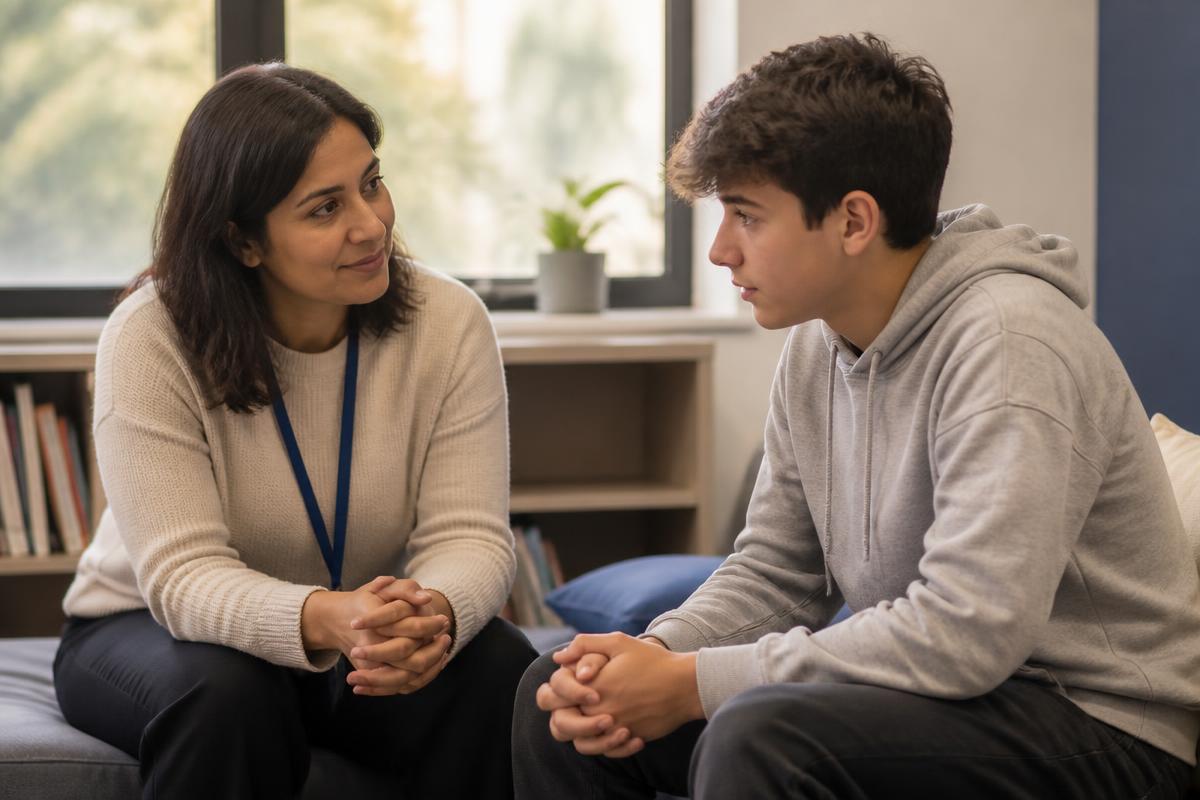
A teacher and a group of secondary students in an open conversation in a bright school room

Why Let's Be Real

Founded by a parent and a school leader who kept seeing the same gap.

Let's Be Real - Mental Health for Young Minds was founded in 2024 by Jacqueline Klemke and Nick Praulins to give whole school communities a shared language for mental health, and practical strategies to use it.

  • Our mission

    Every young person should be surrounded by adults who can recognise what they are going through, hold the conversation, and know where to go next.

  • Our founders

    A Youth Mental Health First Aider, systemic coach and MBA, and a school leader with over twenty years in international education - two perspectives on the same problem.

  • Evidence-informed

    Our curriculum is independently developed, inspired by Mental Health First Aid, and grounded in WHO adolescent mental health data and peer-reviewed research on literacy and destigmatisation.

Read the full story behind Let's Be Real

Our approach

Why Mental Health Literacy Matters

It's not something you teach to one group. It becomes real when students, educators, and parents share the same language.

A student who has the words to name what they're feeling, but goes home to parents who don't, is still alone. A teacher trained to spot early signs, in a school where those signs aren't discussed openly, is still working in silence.

Everything we do exists to put that shared language into the space where students, educators, and parents meet.

Mental Health Literacy lives in the overlapStudentsEducatorsParentsMentalHealthLiteracy

Two sides of the same coin

Destigmatisation and mental health literacy are one piece of work, not two.

Our Youth Mental Health Response training and our Mental Health Literacy programme are the same coin seen from either side. One builds the courage and the skill to respond; the other builds the understanding and the self-awareness that make responding possible.

  1. Knowing, and being able to say it

    Recognising the signs and symptoms of mental health challenges, and having language that makes it ordinary to talk about them. This is where stigma quietly loses its grip: what can be named can be discussed, and what can be discussed can be supported.

  2. Becoming self-aware and resilient

    Understanding your own brain, identity, and limits, and having practical tools to look after yourself and to ask for help early. Literacy without self-awareness stays theoretical; self-awareness without literacy stays private.

And this applies to young people as much as to the adults around them. A school where students can name what they feel, but staff and parents cannot, has only turned half the coin over.

The evidence

What the research actually shows about stigma and mental health literacy in schools.

Stigma is one of the most consistently reported barriers stopping young people from asking for help, and literacy is what turns concern into a useful response. That is why we work on the two together. When schools do the same, the trials show knowledge rises, stigmatising attitudes fall, and young people become measurably more willing to seek support.

97 trials

A 2025 review in JAMA Network Open brought together 97 high-quality studies on reducing stigma, covering 43,852 young people aged 10 to 24.

Crockett et al., JAMA Network Open, 2025

Knowledge grew most

The biggest change was in what young people knew about mental health. Their attitudes shifted too, and so did the way they behaved towards peers who were struggling.

Crockett et al., JAMA Network Open, 2025

More willing to ask

The same review found young people became more open to asking for help, and more likely to say they would - the step that comes just before actually reaching out.

Crockett et al., JAMA Network Open, 2025

50% by age 14

Half of all mental health conditions start by age 14, yet most are never spotted or treated - which is why the school years are the moment to act.

World Health Organization

Anti-stigma work with young people

Pooling many studies, researchers in Cambridge Prisms: Global Mental Health found that anti-stigma work clearly reduced stigmatising attitudes in young people. Both teaching about mental health and meeting people with lived experience helped.

Song et al., Cambridge Prisms: Global Mental Health, 2023

Mental health literacy in schools

A review of mental health literacy programmes in primary and secondary schools found pupils knew more and judged less afterwards - and several of those gains were still there when pupils were checked again later.

Amado-Rodríguez et al., Children, 2022

A curriculum trial in Welsh schools

In the Guide Cymru trial, Year 9 pupils were taught a mental health curriculum by their own teachers. Compared with pupils who were not, they knew noticeably more and held far fewer stigmatising views.

Simkiss et al., BMC Public Health, 2023

Contact and conversation in the classroom

The SchoolSpace trial with UK secondary students found a school-based programme improved understanding and reduced stigma - a reminder that where a session happens, and how it is run, matters as much as what is taught.

Chisholm et al., BMJ Open, 2016

Mental Health First Aid, the model we build on

MHFA International oversees the Mental Health First Aid programme now running in more than 25 countries. Evaluations of youth MHFA consistently show trained adults know more, hold fewer stigmatising views, and feel more confident helping a young person. Our Youth Mental Health Response training is inspired by that model and adapted to school roles.

MHFA International

What the WHO says about adolescents

The World Health Organization estimates that around one in seven 10 to 19 year olds lives with a mental health condition, and that half of all conditions begin by age 14. WHO recommends school-based promotion and early identification as a core response - which is exactly the layer schools can own.

WHO, Mental health of adolescents

The same reviews are honest about the limits: most trials measure short-term change, and long-term follow-up is still thin. That's precisely why we build for sustained, whole-community work rather than one-off assemblies - a single session shifts a survey score, a shared language shifts a school.

Questions we hear often

Signs, conversations, and what training changes

What signs should we actually be looking for?

Changes, more than dramatic moments: a young person withdrawing from friends or activities they used to enjoy, sleep or appetite shifting, marks or attendance sliding, irritability or exhaustion that lasts for weeks, or talk that sounds hopeless. One sign on its own is rarely the story. A pattern that persists is.

How do we talk about mental health without making it worse?

Name what you have noticed, keep it specific and non-judgemental, and then listen far longer than you speak. "I have noticed you seem tired lately - how are things?" opens a door; "What is wrong with you?" closes it. You do not need answers or a diagnosis. Asking directly about how someone is coping does not plant an idea; it usually brings relief.

How does the training support both young people and adults?

The same skills are taught on both sides of the relationship. Adults learn to notice, hold a conversation, and pass it on to the right support. Young people build the self-awareness, language, and tools to look after themselves and to ask for help early. A school only feels safe when both sides speak the same language.

Find your pathway

Where do you come into this?

The same shared language, four different starting points. Pick the one that describes you and see what the work looks like from there.

  • International Schools

    You are responsible for a whole community.

    • Whole-school Mental Health Literacy programme
    • Tiered staff response training: NOTICE, HOLD, LEAD
    • Planning that fits your calendar and safeguarding policy
    Explore School Programmes
  • Parents

    You want to help at home, not hand it over.

    • NOTICE parent workshops in English and German
    • Language that keeps the conversation open at home
    • What to do when you are worried and unsure
    Join a Parent Workshop
  • Educators

    You are the adult in the room when something surfaces.

    • MHFA-inspired Youth Mental Health Response certification
    • Hold a first conversation without carrying it alone
    • Clear handover routes to the people who take it further
    View MHFA & Staff Training
  • Organisations

    You support young people beyond the school gate.

    • Training for youth, sports and community organisations
    • Wellbeing pulse checks and leadership sessions
    • Delivered in English and German, on site or online
    Explore Wellbeing Solutions

What we offer

Programmes for Schools, Parents & Educators

Pick one, or combine them into a programme that fits your calendar and your community.

  • MHFA Training

    Educators, pastoral staff, school leaders

    Youth Mental Health Response - our MHFA-inspired, independently developed certification in NOTICE, HOLD and LEAD tiers.

    Explore Youth Mental Health Response
  • Student Workshops

    Ages 9-18, class or year-group sized

    Age-appropriate sessions on emotions, stress, help-seeking and supporting a friend - built from our Mental Health Literacy modules.

    Explore Mental Health Literacy
  • Parent Workshop (NOTICE)

    Parents and carers

    An evening session that gives parents the signs to NOTICE, the words to start the conversation, and a clear sense of when to seek help.

    Explore the NOTICE parent workshop
  • Wellbeing Pulse Check

    Whole-school or single phase

    A short, structured read on how your community is really doing - anonymous input from students, staff and parents, returned as findings and priorities you can act on.

    Enquire about a Wellbeing Pulse Check
  • Leadership Wellbeing Session

    Heads, SLT, board and governors

    A focused session for the people who set the tone: staff wellbeing, escalation routes, safeguarding overlap, and what good looks like across a school year.

    Enquire about a Leadership Wellbeing Session

Find what you are looking for

Whatever you call it, we probably run it

People search for different words to describe the same need. Here is what our programmes are called, and what you might have typed to find them.

Two programmes. One shared language.

A school that has worked with us has a common vocabulary for mental health that runs from the classroom to the kitchen table, staff who can hold the first conversation, and parents who feel equipped rather than sidelined.

Programme One

Mental Health Literacy

Shared language for your whole community.

Six workshops that build understanding, confidence, and a shared vocabulary for mental health across your school community. Delivered in classrooms, staffrooms, and parent sessions, with content adapted for each audience. Schools can run the full programme or combine modules to match their own priorities.

Upper Primary

Ages 9–11

≈ Upper PYP

Lower Secondary

Ages 11–14

≈ MYP 1–3

Middle Secondary

Ages 14–16

≈ MYP 4–5

Senior Secondary

Ages 16–18

≈ DP

01

Your Growing Brain

How the brain develops, and why feelings and decisions shift as it does.

02

Identity & Belonging

Who am I, and how do I fit into a community that isn't always mine?

03

Healthy Relationships

What makes relationships feel good or go wrong, and how to look after yourself in them.

04

Social Media & Self-Worth

How scrolling shapes self-esteem, and how to stay grounded in it.

05

Taking Care of You

Practical strategies for handling stress, setbacks, and hard days.

06

Understanding Mental Health

Naming what we've been talking about, and how to recognise when something more is going on.

Programme Two

Youth Mental Health Response

Practical skills to act when it matters.

A purpose-built response training for the adults around young people in international schools. Delivered by qualified trainers, structured in three tiers so the depth of training matches the depth of the role.

The three stages

  1. NOTICE

    Parents · 4 hours

    Recognise the early signs and start the conversation.

  2. HOLD

    Teachers · 1 day

    Stay present in the conversation and connect to help.

  3. LEAD

    School leadership · 1 day

    Build the systems that let support take root.

AwarenessWhole-school

Depth of training matched to depth of role

NOTICE

4 hours

For Parents

For parents who want to recognise what their child might be experiencing, and hold the conversation when it matters. Practical skills, honest framing, no jargon.

2 x 2 hours (online or in person)

HOLD

1 day

For Teachers

For classroom teachers on the front line of student wellbeing. Builds confidence to spot early signs, stay present in a supportive conversation, and connect a young person to further help.

4 x 2 hours online or 6 hours in-person

LEAD

1 day

For School Leaderships

For heads of pastoral care, deputy heads, and school leaders. Goes beyond first response into the systems, policies, and whole-school conditions that let mental health support take root.

1-day HOLD workshop is the prerequisite for LEAD. LEAD is in-person only.

Outcomes

Practical Skills for Real Conversations

We agree the outcomes with you before we start, and we measure them. These are the four we track in every programme, using short pre- and post-programme surveys for students, staff, and parents.

Confidence

Adults feel able to act

Staff and parents report higher confidence in starting a conversation about mental health and staying in it, rather than passing it on straight away.

Measured: self-rated confidence before and after training

Earlier identification

Concerns are spotted sooner

Trained staff recognise early signs and raise them through the school's own routes, so support starts before a situation escalates.

Measured: recognition scenarios and referral timing in school records

Help-seeking

Young people ask for support

Students say they are more willing to speak to an adult or a friend, and can name at least two people and one service they would go to.

Measured: help-seeking intention scales, pre and post

Parent-child talk

Conversations continue at home

Parents report more frequent and less anxious conversations with their children about feelings, stress, and asking for help.

Measured: parent survey at the workshop and eight weeks later

Baseline and follow-up data stay with your school. We report the change, not individual answers.

How it works

Shaped around your school, not the other way round.

Every school runs differently. Different timetables, calendars, cultures around parent engagement, staff development rhythms. Our job is to fit the work into your operational reality, not ask you to bend around ours.

What we bringWhat you shape
  • Six literacy modulesModules & order
  • Three-tier response modelAudiences & depth
  • Qualified trainersDelivery format
  • Facilitation materialsTerm, year or several
  • Co-design conversationFits your curriculum

What we bring

A fixed backbone

  • Six literacy modulesDeveloped for international school communities
  • Three-tier response modelYouth Mental Health Response training for the adults around young people
  • Qualified trainersClassroom and leadership backgrounds
  • Facilitation materialsFor students, staff and parents
  • Co-design conversationBefore any delivery starts

What your school shapes

Everything operational

  • Modules & orderWhich you prioritise, and in which sequence
  • Audiences & depthWho engages, and how far the work goes
  • Delivery formatClassrooms, INSETs, evenings, off-timetable
  • Term, year or severalThe rhythm that suits your calendar
  • Fits your curriculumWoven into existing pastoral and wellbeing work

The depth of training is matched to the role, and the durations reflect what's needed to reach certification at each tier. This is the one part of the work we don't flex, because a half-trained responder is worse than an untrained one.

Mental health & neurodivergence

Neurodivergent young people aren't a footnote in this work.

Around 15–20% of people are neurodivergent - autistic, ADHD, dyslexic, dyspraxic, Tourette's and more. They experience anxiety, depression and self-harm at markedly higher rates than their peers, and much of that gap is not intrinsic to being neurodivergent. It comes from years of being misread: masking to fit in, being disciplined for distress, being told to try harder at things that cost them far more effort than anyone can see.

Distress often looks different

Shutdown, meltdown, school refusal, rigidity or apparent 'attitude' are frequently distress signals, not behaviour problems. We teach adults to read the function beneath the behaviour before they respond to it.

Masking hides the warning signs

A young person who copes all day at school and collapses at home is not fine. We help staff and parents compare notes across settings, so exhaustion is spotted before it becomes crisis.

Diagnostic overshadowing is real

When everything gets attributed to autism or ADHD, treatable anxiety, trauma and low mood go unnoticed. Our Youth Mental Health Response training explicitly checks for what's being missed.

What schools are saying

Let's Be Real have helped ISF equip our staff with a shared language, skillset, and strategies through 'Mental Health First Aid for Youth', while supporting the development of wellbeing practices woven into the DNA of our school. This work is central to ISF and SABIS globally, preparing students academically and holistically for success in today's world. Nick and Jacqueline are a pleasure to work with – professional, collaborative, and insightful.
Portrait of David Harrison

David Harrison, School Director

ISF - International School Frankfurt, Germany

The Mental Health First Aider Course (Level 3) with Nick and the Let's Be Real team was phenomenal. The content broadened my perspective on mental health and gave me the confidence to better support both staff and students. Nick's delivery was passionate, authentic, and deeply empathetic. He created a safe space for open and honest conversations. I left feeling inspired, empowered, and truly equipped to make a difference.
Portrait of Michael Blunn

Michael Blunn, Head of Pastoral Care

Internationella Engelska Skolan Hässelby Strand, Stockholm

The two-day Mental Health First Aid course with Let's Be Real, led by Nick, provided an incredibly valuable experience, fitting seamlessly into the framework IES Solna already has in place. Nick's engaging approach made important topics easy to understand and directly relevant to the school. The course provided useful tools and insights to help build a more supportive community for both students and staff.
Portrait of Hannah Southwood

Hannah Southwood, Head of Year & Classroom Teacher

Internationella Engelska Skolan Solna, Stockholm

Trusted by

Trusted by Educators and Families

Our work sits inside school communities across Germany and Europe, in English and German.

  • International schools

    Primary through secondary, working with teaching staff, pastoral teams and leadership.

  • Parent communities

    PTAs and parent associations hosting evening workshops for families across year groups.

  • Educational organisations

    Networks and member organisations, including ECIS, bringing training to their schools.

  • MHFA-certified training contexts

    Delivered by qualified Youth Mental Health First Aiders, alongside our own independently developed curriculum.

Upcoming workshops

Upcoming Workshops & Training

Open sessions you can book directly. In-school dates for Youth Mental Health Response are scheduled around your calendar.

  • NOTICE - parent workshop (September)

    Frankfurt, in person - English

    An evening for parents and carers: the signs to notice, the words to start the conversation, and when to seek help.

    Book the September NOTICE workshop
  • NOTICE - parent workshop (English)

    Further dates - English

    The same session, running throughout the school year. Pick the date that works for your family.

    See all English NOTICE dates
  • NOTICE - Elternworkshop (German)

    Further dates - German

    Our parent workshop in German, for families who would rather have this conversation in their first language.

    See all German NOTICE dates

Youth Mental Health Response training

NOTICE (1 day), HOLD (+1 day) and LEAD tiers run on request for schools and organisations, in English or German. Tell us your term dates and we will build the schedule around them.

Request training dates

The people behind Let's Be Real

Our Team

A small, practitioner-led team. Every programme is designed and delivered by qualified mental health trainers who work directly with schools, students and families.

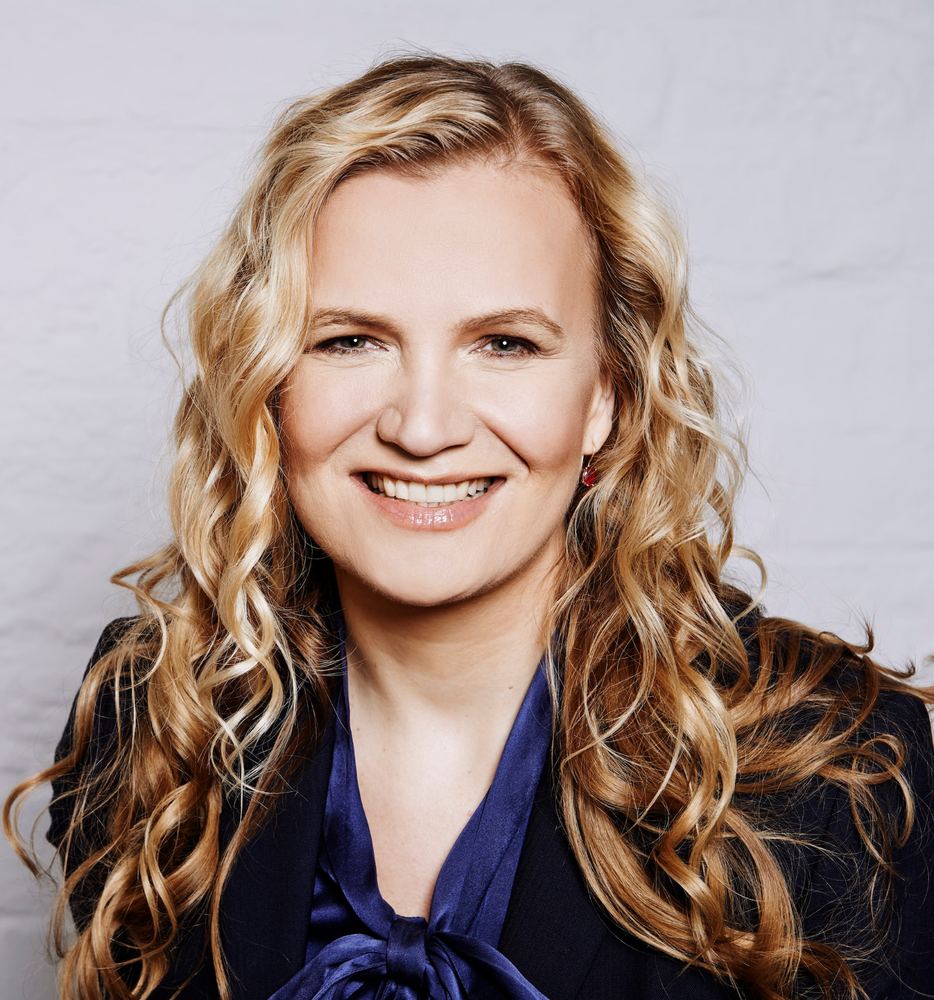
Portrait of Jacqueline Klemke, co-founder of Let's Be Real

Jacqueline Klemke

Owner & Co-founder - Mental Health and Wellbeing Consultant

Connect on LinkedIn

Jacqueline is the owner of Let's Be Real. Her training as a Life and Business Coach, and as a Couples and Family Counsellor, led her to pursue further training in this field. In Q4 of 2026 she will also complete her training as a psychotherapist (non-medical practitioner).

Mental health - and giving tweens and teens, including their teachers and families, the tools and support to become resilient adults - has been at the forefront of her work at Let's Be Real – Mental Health for Young Minds, which she co-founded with Nick Praulins in 2024.

LBR takes a whole-community approach. As part of that, parents are included in the conversation around mental health at schools.

Qualifications

  • Youth Mental Health First Aider
  • Mental Health and Wellbeing Consultant
  • Workplace Mental Health and Wellbeing Instructor
  • Certified Train-the-Trainer
  • Life and Business Coach
  • Couples and Family Counsellor
  • Master of Business Administration (MBA)

Memberships

  • Association of Child and Adolescent Mental Health (ACAMH)
  • Global Mental Health Action Network (GMHAN)
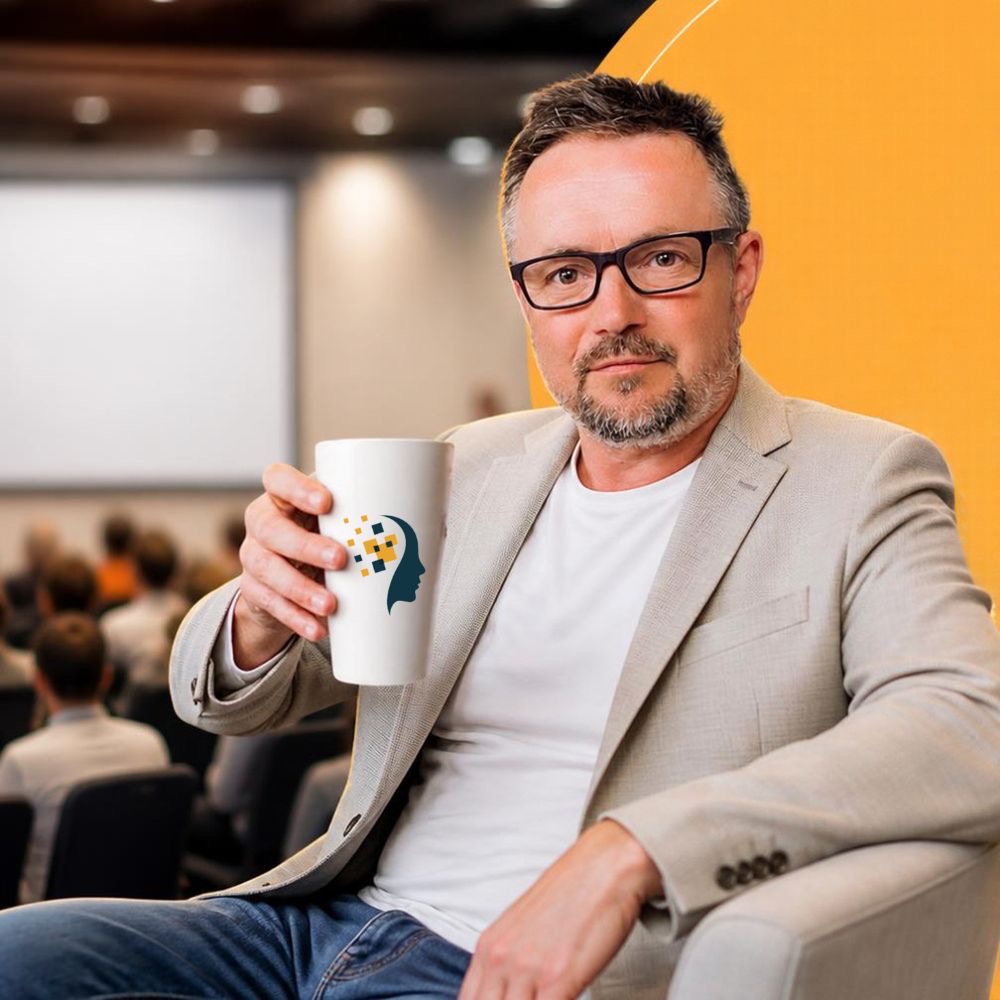
Portrait of Nick Praulins, co-founder of Let's Be Real

Nick Praulins

Co-Founder & Associate Partner - Communication and Educational Consultant

Nick co-founded Let's Be Real with Jacqueline because schools are on the front lines of a growing mental health challenge, yet most lack the tools, training and shared language to respond effectively. The result is stigma, silence and strain across entire school communities: students, teachers, staff and families alike.

Through this work he designs and delivers training that helps communities talk openly about mental health and build practical strategies for support.

By profession he is a senior communication and educational consultant working with European organisations across countries, languages and cultures. He specialises in helping leaders and teams navigate moments of change, turning strategy into communication and learning experiences that people actually understand, trust and use. His work is informed by over 20 years of experience in education and leadership, including time as a school leader.

Whether in classrooms, boardrooms or cross-cultural teams, he focuses on creating psychologically safe, resilient and high-performing communities.

Qualifications

  • Certified First Aid for Mental Health (FA4MH) Instructor
  • Youth Mental Health First Aider
  • Senior Communication and Educational Consultant
  • Former school leader - 20+ years in education and leadership

Our story

The story behind Let's Be Real

Back in the day, Jacqueline was a parent at the school Nick was heading. She walked into his office - unannounced - and asked whether she could make a proposal on how to improve social skills and social wellbeing. He said: “Go for it.”

What she did not know at the time was how important those issues already were, and still are, to him. Let's Be Real is the continuation of the work they started back then - and the rest, as they say, is history.

Jacqueline had always been deeply passionate about children and their mental health, but life took her on a different path first: twenty years as a conference interpreter, a profession she still enjoys today. Along the way she tutored children and adults, trained as a Life and Business Coach, and then as a Systemic Couples and Family Coach, after seeing how often people's struggles ran deeper than language - into core beliefs, expectations and cultural norms.

Nick came to the same place from the other side of the desk: over twenty years in education and leadership, including time as a school leader, watching schools carry a growing mental health load without the tools, training or shared language to respond.

In 2024 they founded Let's Be Real – Mental Health for Young Minds to give whole school communities - students, educators and parents - that shared language, and practical strategies to use it.

Free guide

5 Conversations That Help Young People Open Up

A short, practical guide for parents and educators: five openings that work, what to say when you get a one-word answer, and how to stay in the conversation without pushing.

  • Five conversation starters you can use tonight
  • What to do when the answer is "I'm fine"
  • How to respond when something serious comes up

We use your email only to send the guide and reply to you. See our privacy policy.

Typography

Why this site is set in Lexend

Every word on this site is set in Lexend, an open-source typeface designed to reduce visual stress and support reading fluency. It is a small design decision with a real effect: the people who most need this information - young people, parents and busy school staff - should never have to work to read it.

Open letterforms
Wider apertures and clearly distinguishable characters make it harder to confuse letters such as l, I and 1 at a glance.
Generous spacing
Extra space between letters and lines reduces crowding, which is one of the main reasons text feels tiring to read.
Reading fluency
The research behind Lexend links this kind of open setting to measurable gains in reading speed and comprehension, particularly for readers who find dense text difficult.
Dyslexia-friendly
Lexend is widely recommended as a dyslexia-friendly typeface: the open shapes and loose spacing ease the letter crowding and visual stress that many dyslexic readers describe.
Scales with you
The site-wide text-size control scales headings and body copy together, so larger text stays properly spaced rather than simply bigger.

Lexend is used at comfortable body sizes with generous line height throughout, and pairs with our contrast and focus standards described in the accessibility statement. Choosing a dyslexia-friendly typeface is a small measure - but a meaningful one. Inclusion is built from decisions like this, made before anyone has to ask for them.

Next steps

Book a 20-minute discovery call.

No pitch, no obligation. Twenty minutes to hear what your school is dealing with and tell you honestly whether we are the right fit.

  1. 1

    Tell us where you are

    A few lines about your school, the year groups involved, and what prompted you to get in touch.

  2. 2

    We come back with options

    A short reply with the formats that fit your calendar, indicative timings and costs.

  3. 3

    Book a 20-minute discovery call

    Pick a slot that works for you. You leave the call with a clear recommendation and next steps in writing.

We reply to every enquiry within two working days, Monday to Friday, 9:00-17:00 CET.

Let's work together.

Interested in working together? Tell us about your school or family and we will be in touch shortly.

By sending this message you agree to our privacy policy.

Book a Call