ADHD Awareness Month: Different Brains, Real Strengths
By Jacqueline Klemke
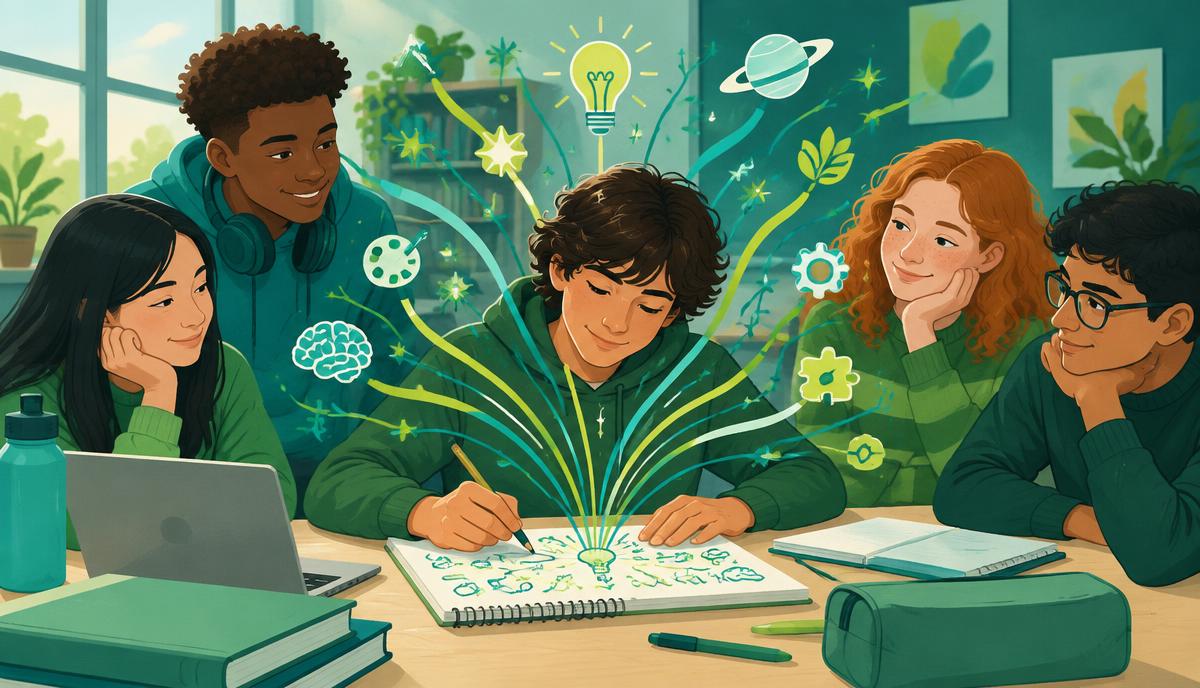
October is ADHD Awareness Month. Beyond the statistics, this article looks at the strengths that often come with ADHD — creativity, energy, hyperfocus and original thinking — and why ADHD sitting on a spectrum means schools need customised approaches rather than one-size-fits-all support.
October is ADHD Awareness Month — a good moment to look past the stereotypes. ADHD is still too often reduced to a restless child who cannot sit still. The reality is far more interesting: ADHD is a different way of processing attention, energy and interest, and it comes with real strengths as well as real challenges.
What the numbers say
Research suggests that around 5% of children and young people worldwide meet the criteria for ADHD, and many carry it into adulthood. It is one of the most common neurodevelopmental differences schools will encounter — which means that in almost every classroom, there is likely at least one student whose brain works this way.
Boys are still diagnosed more often than girls, partly because girls more often show inattentive rather than hyperactive traits — daydreaming, quiet disorganisation, internal restlessness — and are easier to overlook. Many young people are only identified in their teens, or not at all. And ADHD frequently overlaps with other experiences such as anxiety, low mood or sleep difficulties, which is one reason it belongs in every conversation about student mental health.
The strengths we talk about too little
A deficit-focused view misses half the picture. Many people with ADHD describe qualities that are genuine assets — in school and far beyond it:
- Creativity and original thinking — making connections others do not see, questioning the obvious, finding unusual solutions
- Hyperfocus — the ability to go remarkably deep when a topic truly captures their interest
- Energy and drive — enthusiasm that can carry a whole group, especially in hands-on and project-based work
- Courage and spontaneity — a willingness to try things, take healthy risks and think entrepreneurially
- Empathy and intuition — many young people with ADHD are highly perceptive of moods and dynamics around them
None of this erases the difficulties. But a young person who only ever hears what is hard for them — sitting still, waiting, remembering, organising — rarely gets to build on what they are good at. Strengths and challenges belong to the same brain.
A spectrum, not a single profile
There is a reason ADHD is described as sitting on a spectrum: no two students with ADHD are alike. One cannot stop moving; another sits quietly while their thoughts race. One talks constantly; another withdraws. One thrives on structure; another suffocates under it. Presentation, intensity and needs vary — and they can shift with age, environment and stress.
That is exactly why one-size-fits-all support fails. A strategy that helps one student — a movement break, a timer, a seat at the front — may do nothing for the next, or even make things harder.
What this means for schools
If ADHD is a spectrum, support has to be customised. In practice, that means:
- Getting to know the individual student before reaching for a standard measure — what helps this young person focus, feel safe and engage?
- Offering flexibility in how students learn and show what they know — movement, choice, variety in tasks and formats
- Working with strengths deliberately, not only managing difficulties — giving students roles and tasks where their qualities count
- Adapting conversations: shorter, clearer, side-by-side rather than face-to-face interrogation, and free of shame
None of this requires a diagnosis first. Curious, individualised support helps many students — including those whose brains simply work a little differently, whether or not a label is attached.
Where to go from here
Neurodivergence and mental health are closely connected: young people whose needs go unrecognised carry a higher risk of anxiety, low self-worth and withdrawal. That is why our HOLD training for teachers and pastoral staff includes a one-hour expert session with Chris Benson, our Neurodivergence and Education Specialist, on how neurodivergence can affect mental health and how to adapt supportive conversations. ADHD Awareness Month is a good moment to start that conversation in your school — not just in October.
Originally published on letsbe-real.eu.